




Cardiology
We navigate the high complexity of cardiology billing, from diagnostic tests and catheterizations to surgical procedures, ensuring precise coding and modifier use to capture the full value of your specialized services.


Pameric is a Maryland-headquartered technology firm with offices in Las Vegas, Nevada, dedicated to transforming visions into innovative solutions. As a woman-owned and minority-owned small business that holds Small Business Reserve (SBR) certification in the State of Maryland, Pameric delivers agile, scalable, and results-driven technology solutions to government and private sector clients. Guided by integrity and innovation, we proudly provide the technology you deserve.
 Angular
 React
 Node.js
 .NET MVC
 HTML5.NET Core
 Python
 PostgreSQL
 MySQL
 MongoDB
 TypeScript
 JavaScript
 Bootstrap
 Tailwind CSS
 Kotlin
 SwiftReact Native
 iOS Apps
 Android Apps
 Next.js
 Vue.js
 Django
 Ruby on Rails
 Redux
 GraphQL
 Kubernetes
 Spring
 Express
 AWS
 Azure
 Docker
 Git
 PHP
 Jest
 CypressAngularReactNode.js.NET MVCHTML5.NET CorePythonPostgreSQLMySQLMongoDBTypeScriptJavaScriptBootstrapTailwind CSSKotlinSwiftReact NativeiOS AppsAndroid AppsNext.jsVue.jsDjangoRuby on RailsReduxGraphQLKubernetesSpringExpressAWSAzureDockerGitPHPJestCypress
"Pameric Inc. has been a reliable partner in enhancing and maintaining our ProLaw Case Management System. Their work improved system performance, streamlined operations, and supported our teams in managing a high volume of cases efficiently. The reporting portal they developed significantly strengthened our case load visibility and resource allocation across districts."

"Transforming Your Visions To Information Technology Solutions"


Since 2011, Pameric Inc. has established a proven record of excellence in developing, deploying, and maintaining secure, cloud-based IT systems for state and federal agencies. Our portfolio includes major projects for the State of Maryland Office of the Public Defender, the New York State Department of Health, the Internal Revenue Service (IRS), and the U.S. Department of Veterans Affairs. In addition to our public-sector engagements, Pameric has successfully delivered customized software solutions for private-sector clients, including collection agencies and utility companies.
Our expertise is custom-tailored software built precisely for client needs using cutting-edge technologies—with strong emphasis on security, durability, and scalability. We follow agile methodology to deliver projects with complete transparency. Our modern architectural approach ensures that upgrading or improving the front end, middle layer, or backend is never a bottleneck. From software, web applications, Windows applications, APIs, and mobile apps to graphic design—our highly talented experts bring a collective 50+ years of hands-on experience to every project.
To see our recent work, please click here.
At Pameric, we embrace a product-driven philosophy rather than a revenue-driven one. We believe that delivering reliable, innovative, and high-quality solutions is the cornerstone of enduring client partnerships. Our commitment to excellence ensures that each product we deliver speaks for itself.


Native and cross-platform mobile solutions delivering intuitive user experiences, robust performance, and seamless integration with your existing systems.
Design and development of secure, scalable REST and GraphQL APIs with microservice architectures that enable faster releases and seamless integrations.
User-centered design combining research, usability testing, and modern visual design to create intuitive experiences aligned with your brand.
Manual and automated testing services covering functionality, security, performance, and regression for reliable software delivery.
End-to-end SaaS product development including multi-tenant architecture, subscription systems, usage analytics, and scalable cloud deployment.
Database architecture and data modeling services focused on normalized schema design, relationship mapping, and long-term maintainability.
Integrate SQL and NoSQL data stores with applications, APIs, and third-party systems to ensure reliable and secure data flow.
Design and implementation of multi-tenant systems with tenant isolation, role-based access controls, and scalable resource management.
Ongoing monitoring, performance optimization, security updates, and enhancements to keep your applications stable and future-ready.


Clear requirements, stakeholder alignment, and Agile execution through expert business analysis, Scrum practices, and continuous collaboration.
Strategic consulting covering legacy system modernization, cloud migration planning, architecture audits, and technology roadmaps.
Design and implement scalable, secure, and efficient IT architectures that support business growth and technological advancements.
Strategic consulting covering legacy system modernization, cloud migration planning, architecture audits, and technology roadmaps.
Strategic consulting covering legacy system modernization, cloud migration planning, architecture audits, and technology roadmaps.
Comprehensive security services including penetration testing, vulnerability assessments, zero-trust architecture, and continuous monitoring.
Application security assessments, secure architecture design, and compliance support to protect sensitive data and meet industry standards.


From the moment your patient enters the door to the moment you receive payment for services rendered, our dedicated medical billing services team is committed to supporting your growth by addressing and improving key areas of your revenue cycle. Pameric RCM Plus oversees the entire revenue cycle to deliver risk-free cash flow through strict compliance and disciplined execution. By enforcing accuracy and regulatory alignment at every stage, we protect revenue, eliminate leakage, and convert earned care into collected revenue, consistently and without operational disruption.
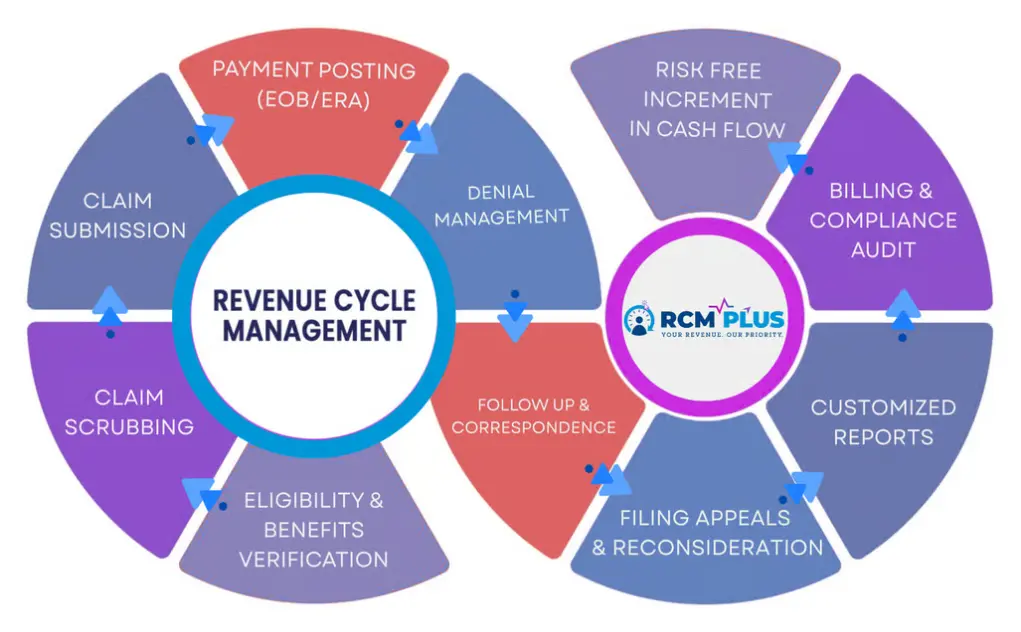
At Pameric RCM Plus, medical billing is not just claim submission. It is a controlled, compliance-driven revenue process designed to maximize collections while minimizing denials, delays, and audit risk. Our billing model covers the entire revenue cycle, from charge entry to final payment resolution.
At Pameric RCM Plus, medical billing audits are designed to do more than identify errors. Our audits are structured to reduce risk, protect revenue, and strengthen long-term compliance by examining every critical point in the revenue cycle.
At Pameric RCM Plus, quality is not just a buzzword. It is the foundation of our billing work and the reason providers trust us. Quality means accuracy, reliability, insight, and accountability at every step of the revenue cycle.
We ensure accurate patient demographics, proper CPT, HCPCS, and ICD coding, and complete documentation so claims are accepted the first time.
From verifying insurance eligibility before service to final payment posting and denial follow-up, our team follows standardized quality checkpoints. This reduces errors and improves cash flow.
Even small mistakes such as a wrong date of birth or incorrect modifier can trigger costly denials. That is why we apply multi-level reviews before submission.
When issues arise, such as denials or payer mismatches, we do more than resubmit claims. We analyze root causes, correct underlying workflows, and refine quality controls so the same issues do not repeat.
This is how quality becomes measurable and improves over time.
At Pameric RCM Plus, HIPAA compliance is not a checkbox. It is a daily operational discipline. One data breach, careless access, or unsecured transmission can expose providers to financial penalties, legal risk, and reputational damage.
That is why HIPAA compliance is embedded into how our team works, communicates, accesses data, and resolves issues. Compliance is never treated as an afterthought.
US healthcare providers are facing increased HIPAA enforcement and tighter scrutiny on outsourced billing operations. The biggest concerns we see in the market:
Our operating model is built specifically to address these risks.
We operate on one principle: If it cannot be audited, it is not compliant.
That is why Pameric RCM Plus focuses on controlled access, traceability, and disciplined processes so providers stay protected even as scrutiny increases.
At Pameric RCM Plus, we understand that superior revenue cycle management requires deep specialty-specific knowledge. Each area of medicine has unique coding, documentation, and payer rules. Our team does not just process claims; we become experts in your field to protect your revenue and ensure compliance.
We navigate the high complexity of cardiology billing, from diagnostic tests and catheterizations to surgical procedures, ensuring precise coding and modifier use to capture the full value of your specialized services.

We expertly manage the broad range of E/M codes, chronic care management, and annual wellness visits, ensuring accurate documentation and coding for both routine and complex patient encounters.

We handle the diverse coding needs of a family practice, from acute care and pediatric visits to chronic disease management in adults, ensuring accurate billing across all age groups and patient conditions.

We are proficient in the nuances of behavioral health billing, including E/M codes, psychotherapy integration, telepsychiatry services, and individual and group therapies, ensuring compliance and maximizing reimbursement.

We manage the intricate billing for nephrology services, including in-office consults, dialysis treatments, and ESRD-related care, with expert knowledge of capitated payment models.

We specialize in urology-specific CPT codes for surgical procedures, scopes, and cancer care, ensuring accurate billing and robust reimbursement for both office and facility-based services.

We optimize revenue for endoscopic procedures, colonoscopies, and related services, with expert knowledge in correct coding, modifier application (for example -51 and -59), and management of bundling issues.

We accurately code complex pulmonary services, including critical care, bronchoscopies, and sleep studies, ensuring full reimbursement for both diagnostic and therapeutic interventions.

We handle the full spectrum of OB/GYN billing, from routine wellness and global maternity packages to complex surgical procedures, ensuring accurate coding for both office and surgical services.

We navigate specialized billing for liver disease management, including complex diagnostic testing and treatment regimens, ensuring billing accuracy for this gastroenterology subspecialty.

We specialize in podiatry-specific CPT coding for surgical procedures, wound care, and orthotics, ensuring accurate billing and robust reimbursement for routine and surgical foot and ankle care.

We expertly bill infusion services, complex drug administration, and E/M visits central to rheumatology, ensuring proper reimbursement for both medication and management.

We efficiently manage high-volume procedures, biopsies, and lesion removals, ensuring accurate coding and maximizing reimbursement for medical and cosmetic dermatology services.

We handle immunology billing, including complex infusion services, allergy testing, and immunotherapy, ensuring ICD and CPT coding reflects the sophistication of care delivered.

We manage endocrinology billing for complex E/M visits, diabetes management, hormone therapies, and bone density studies.

We specialize in physical therapy billing, accurately coding units of time, modalities, and therapeutic procedures while maintaining compliance so you can focus on patient care.

We expertly code advanced wound care treatments, debridement, and hyperbaric oxygen therapy, ensuring documentation supports medical necessity for these specialized services.

We accurately handle well-child visits, immunizations, and pediatric-specific procedures, ensuring coding and billing reflects the unique care provided to younger patients.

We ensure precise coding for diagnostic and interventional radiology services, accurately applying modifiers and correctly billing technical and professional components.

We navigate complex coding for injections, nerve blocks, medication management, and trigger point injections, ensuring precise documentation and compliance for interventional and chronic pain reimbursement.

We manage billing for complex infectious disease care, including prolonged antibiotic therapies, consults, and specialized drug regimen billing.
Stop losing revenue to gaps in your workflow. Our add-on services are designed to eliminate bottlenecks, reduce denials, and accelerate your cash flow without increasing your internal workload.


Convert raw data into actionable dashboards, analytics, and custom reports aligned with business goals.
AI-powered automation, predictive analytics, and intelligent workflows that improve accuracy and operational speed.
Custom AI and machine learning models that enable forecasting, pattern detection, and smarter operational planning.


Automated build, deployment, and monitoring pipelines that increase release quality and delivery velocity.
Seamless integration of third-party and internal systems to enable secure data flow and process automation.
End-to-end cloud migration services covering assessment, rehosting, replatforming, and post-migration optimization.
Modernize legacy applications to improve performance, reduce technical debt, and extend long-term system value.
Cloud database administration services covering provisioning, monitoring, backup policies, security controls, and ongoing optimization.
Planned and validated migration of on-premise or legacy databases to cloud platforms with schema, data, and performance compatibility.
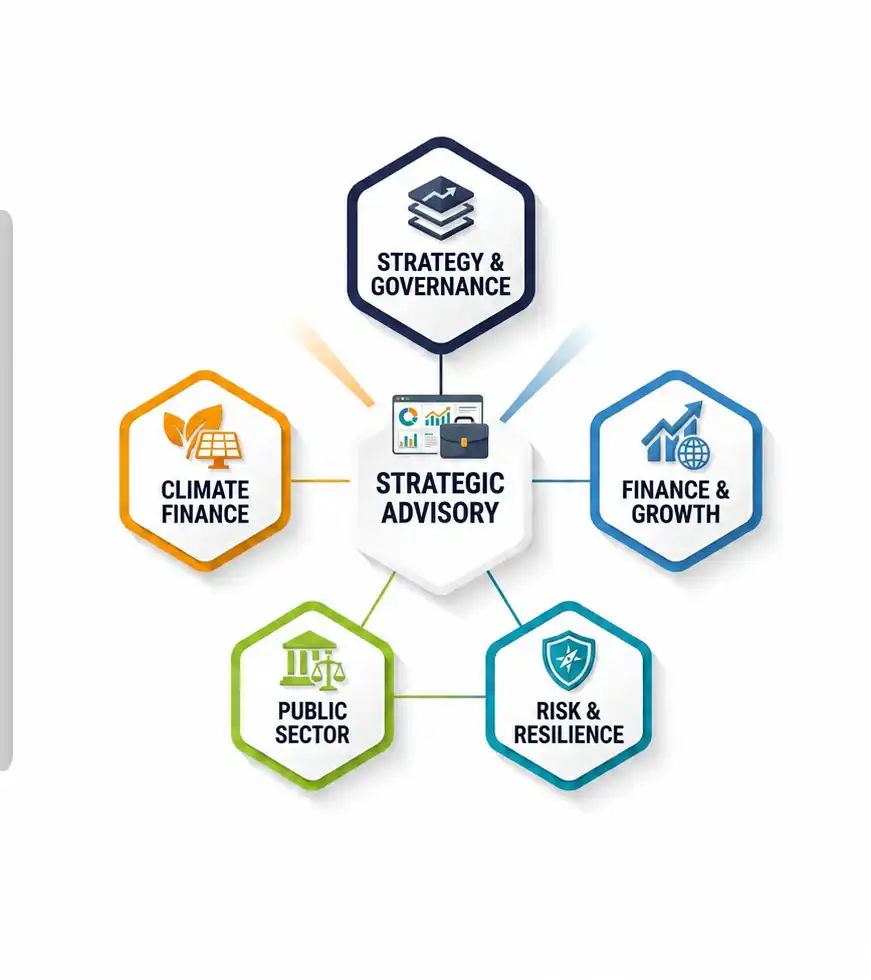
Whether the client is a founder-led business, a large corporation, a city government, a public enterprise or a policy institution, the pressure is familiar: priorities compete, resources are limited, risks move quickly and implementation is difficult. PAMERIC helps leaders identify what matters most, make disciplined choices and convert those choices into results that can be measured.
Our role adjusts to the client’s scale, mandate and operating reality.
Sharpen pricing and margins, improve cash visibility, evaluate investments, introduce practical controls and build systems that can scale with the business.
Align priorities, capital, performance measures and risk ownership so enterprise strategy reaches business units—and produces measurable results.
Strengthen budgeting, revenue forecasting, liability management, service planning and accountability across cities, counties and government-owned entities.
Combine policy analysis, fiscal modelling and institutional design with the capacity, governance and implementation pathways needed for real-world adoption.
A cash-flow problem may begin with pricing, inventory or an investment decision. A municipal budget gap may be tied to revenue forecasting, liabilities or service design. A corporate risk framework will not work if it sits outside strategic priorities and operating accountability.
Our five Vectors connect these decisions so that solving one problem does not create another.
Begin with a focused need—cash, growth, risk, budgeting, governance, policy or climate readiness.
Bring in adjacent expertise when the problem crosses financial, operational, institutional or regulatory boundaries.
From a targeted diagnostic for an SME to institution-wide transformation for a corporate or public body.
Define what is getting in the way—growth, cash, delivery, risk, accountability or institutional capacity.
Connect financial, operational, market and policy evidence to identify causes, not just symptoms.
Turn the analysis into priorities, funding choices, practical tools and clear ownership.
Track results, strengthen internal capability and adapt the response as conditions change.
PAMERIC’s leadership brings together strategic finance, risk, corporate governance, ESG, innovation and institutional transformation—combining academic rigour with board-level and executive perspective.

PhD · CFA · FRM
Senior specialists are aligned to each mandate so strategy, governance, finance, sustainability and transformation are addressed as connected decisions.

PhD · FRM
Bata Corporation · SEFAM Pvt Ltd.

HDR · PhD · CESGA · CPA (Aust)
Director, Knowledge Center — DIGIT, Excelia Business School, France
We connect institutional ambition to choices, funded initiatives, accountable owners and a performance system that tells leaders—early—whether the plan is working.
A credible plan is more than a document. Every outcome must connect to a strategic choice, an initiative, an owner, a resource decision and a measurable result.
Define the few enterprise or public-value outcomes that matter.
Decide where to play, how to win and what not to pursue.
Fund priorities, sequence delivery and assign executive ownership.
Set baselines, targets, tolerances, data owners and reporting cadence.
We design KPI trees that combine outcomes, operational drivers, risks and delivery milestones. Each measure receives a precise definition, formula, baseline, target, frequency, data source and named owner—eliminating debates over whose number is correct.
Decision required: accelerate two margin initiatives; assign recovery owner by next review.
We translate governance principles into practical decision rights, committee mandates, reporting packs and review routines—scaled for listed companies, private and family businesses, public enterprises, nonprofits and government-owned entities.
Skills matrix, independence and conflict review, diversity of perspective, succession and director induction.
Board and management mandates, reserved matters, delegation-of-authority thresholds and RACI ownership.
Audit and risk, nomination and governance, and compensation or people committees—with specialist committees where the mandate requires.
Annual calendars, decision-quality information, committee charters, board evaluation and action tracking.
Compliance is context-specific. Committee requirements vary by jurisdiction, listing rules, sector and legal form. PAMERIC maps the applicable obligations first, then designs committee structures, charters and membership criteria that are both compliant and workable.
The G20/OECD Principles place strategic guidance, management oversight, risk governance and board accountability at the center of effective governance. IFC also identifies operating efficiency, access to capital, risk mitigation and protection against mismanagement among the practical benefits of sound governance.
We help CFOs and leadership teams move from backward-looking reporting to an integrated decision system—connecting growth, margins, cash, capital and risk with the operating drivers that management can actually influence.
The problem is rarely the absence of reports. It is the absence of a reliable line of sight from market assumptions and operating activity to financial outcomes and management action.
Plans become obsolete after the first market, volume or cost shock—and teams return to spreadsheets and intuition.
Revenue expands while working capital, inventory, collections and funding needs remain poorly connected to the growth plan.
Pricing, mix, discounting, input costs and operating inefficiencies are aggregated until the root cause is no longer visible.
Finance spends the cycle assembling and reconciling data, leaving too little time to challenge assumptions or influence action.
Enterprise targets exist, but functions and frontline teams cannot see which operational drivers they own.
Boards, investors, lenders, executives and operating teams receive the same pack despite needing different decisions and evidence.
We connect actual performance to business drivers, refresh the outlook, test scenarios and convert the result into explicit choices. The objective is not forecasting precision at any cost—it is early visibility, disciplined assumptions and enough time to act.
Outlook: revenue remains above plan; margin and cash require action now—not at quarter close.
A decision-ready variance review separates volume, price, mix, cost, productivity and timing effects. It shows whether the variance is temporary or structural, quantifies the full-year implication and records the management response.
We reduce scorecard clutter by linking a small set of outcome measures to the financial and operational drivers that teams can influence.
Financial storytelling should be consistent without being identical. We segment reporting around the decisions, time horizon and level of detail each stakeholder requires.
Value creation, risk, capital allocation, outlook and strategic trade-offs.
Growth drivers, margin bridge, scenarios, resource choices and corrective actions.
Liquidity runway, covenant headroom, cash conversion and downside resilience.
Controllable drivers, unit economics, service levels, milestones and named actions.
AI agents can prepare reconciliations, flag anomalies, refresh forecast inputs, draft variance commentary and orchestrate recurring workflows. We design these uses around controlled data, defined approval rights, audit trails and human accountability—so automation releases capacity for analysis instead of creating a new control problem.
Our work embeds repeatable models, governance and skills inside the finance function so teams can sustain the planning and performance cycle themselves.
Integrated P&L, balance sheet and cash flow with operational drivers, assumptions and scenarios.
KPI dictionary, ownership map, variance thresholds, review cadence and decision-focused management packs.
Controlled data flows, reconciliations, dashboards and repeatable workflows that reduce spreadsheet dependency.
Business-partner routines, analytical training, forecast discipline and documented processes that remain after the engagement.
We build risk systems that distinguish regulatory obligation from managerial foresight—helping financial institutions meet supervisory expectations while enabling businesses and public entities to anticipate threats, protect strategic objectives and act before disruption becomes crisis.
The architecture must fit the institution. A regulated bank cannot be managed like an industrial company; an SME should not inherit a bank-sized compliance machine. Both need clear risk appetite, ownership, evidence and timely action.
For banks and other regulated institutions, risk management is embedded in prudential rules, examination expectations and board accountability. We map requirements to the institution’s charter, size, complexity and activities—then connect policy, measurement, limits, controls, validation and regulatory evidence.
For operating organizations, ERM should protect objectives—not produce a static register. We identify critical exposures, assess velocity and interdependence, evaluate controls, define mitigation and install early-warning signals that management can use.
We work backward from strategic, financial, operational and public-service objectives. That reveals which uncertainties can prevent success, which controls already exist, whether residual exposure is acceptable and where mitigation resources should be concentrated.
Heat maps prioritize discussion; they do not replace scenario analysis, control testing or quantified exposure where better data are available.
Escalation: threshold breach triggers an owner, response, due date and governance route—not just a red indicator.
Key risk indicators should be forward-looking, attributable and connected to risk appetite. We define thresholds and escalation rules so management knows when an exposure has moved from normal monitoring to intervention or board attention.
U.S. supervisory expectations are applied according to charter, asset size, complexity and activities. We help institutions translate the applicable requirements into board-approved appetite, independent oversight, credible measurement, limits, controls, validation, stress testing and traceable management action.
Capital adequacy, loss absorption, scenario design, planning governance and management actions.
Cash-flow projections, funding concentration, liquidity buffers, IRR and contingency funding.
Underwriting, portfolio migration, concentration, CECL governance and credit stress testing.
Limits, valuation, exposure measurement, collateral and concentration monitoring.
Cyber, fraud, resilience, vendor lifecycle, incident response and control testing.
Inventory, tiering, development standards, independent validation, monitoring and change control.
Proportionality matters. Regulatory scope is not identical for every institution. PAMERIC begins with an applicability map covering the relevant federal and state regulator, institution type, size thresholds, risk profile and products before designing the framework.
A common language that prevents material exposures from falling between functions.
Cause, event, impact, inherent risk, controls, residual risk, owner and due action.
Plausible adverse conditions translated into financial, operational and service impacts.
Thresholds, triggers and early-warning indicators connected to explicit response protocols.
PAMERIC supports public, quasi-public and development institutions with applied economics, finance, governance and program-delivery expertise—from a focused diagnostic or evaluation to a multi-year reform and investment mandate.
Our proposition is deliberately wider than macroeconomic stabilization. We work where policy, institutions, finance and delivery meet—across local, national and international mandates.
Fiscal planning, public investment, service delivery and institutional modernization.
Financial sustainability, governance, performance contracts and transformation.
Project preparation, appraisal, economic analysis, portfolio results and capacity building.
Diagnostics, program design, evaluation, technical assistance and knowledge products.
Applied economics, surveys, modelling, sector studies and policy translation.
Theory of change, grant economics, results frameworks and independent review.
Development organizations commission outside expertise when they need independence, specialized capability, surge capacity, local context or a defined output delivered within a fixed timetable.
PFM diagnostics, medium-term fiscal frameworks, expenditure efficiency, treasury, controls, reporting and reform roadmaps.
Pre-feasibility, financial and economic appraisal, PPP diagnostics, affordability, funding strategy and implementation readiness.
Financial diagnostics, governance, performance agreements, subsidy analysis, capital structure and portfolio monitoring.
Growth diagnostics, industrial and competitiveness studies, food systems, financial inclusion and regional development strategies.
Baseline, mid-term, completion and thematic evaluations with defensible evidence and recommendations.
Theory of change, indicators, baselines, targets, data plans and implementation dashboards.
Cost-benefit analysis, fiscal impact, demand forecasts, affordability and sensitivity analysis.
Instrument design, quantitative analysis, literature synthesis, policy briefs and decision notes.
Executive workshops, technical curricula, toolkits, manuals and train-the-trainer delivery.
Consultations, political-economy mapping, private-sector assessment and implementation risk.
Management question: what must change now to protect the intended development outcome?
We connect technical analysis to institutions, budgets, incentives, implementation capacity and measurable outcomes. Each recommendation is tested for affordability, ownership, political and operational feasibility, sequencing and data requirements.
World Bank advisory work spans policy design, institutional strengthening, capacity and development strategy. AfDB and UNIDO opportunities demonstrate recurring demand for evaluations, M&E, feasibility and economic analysis, environmental and social studies, financial services and capacity building.
We help organizations connect climate, nature, water and food-system exposure to strategy, risk, capital and credible disclosure—while converting transition and adaptation needs into financeable action.
Climate, ecosystems, water and food systems are economically connected. A narrow disclosure exercise can miss the dependencies and physical constraints that actually determine resilience, cost and access to capital.
Physical and transition risk, scenario analysis, emissions, resilience and transition planning.
Dependencies, impacts, priority locations, ecosystem risk and nature-related opportunity.
Basin exposure, availability, quality, operational dependency, stewardship and value-chain risk.
Climate-smart agriculture, food security, supply resilience, land use and inclusive value chains.
IFRS S1 establishes general requirements for sustainability-related financial disclosures and IFRS S2 addresses climate-related risks and opportunities. Application still depends on jurisdiction, entity type and effective date. We begin with applicability and materiality, then design governance, data, controls and financial connectivity.
Decision use: connect metrics to operating plans, capital allocation, risk appetite and external reporting.
A credible dashboard links environmental indicators to financial effects and accountable decisions: revenue at risk, operating cost, asset impairment, insurance, supply continuity, CapEx requirements and funding sources.
For African and other emerging markets, the opportunity is wider than corporate carbon disclosure. PAMERIC can support climate-finance readiness, resilient infrastructure, water and agrifood systems, project preparation, local financial institutions, just-transition analysis and the monitoring evidence required by development financiers.
Applicability assessment, IFRS S1/S2 gap analysis, governance, materiality, metrics, controls and assurance readiness.
Physical and transition scenarios, geospatial screening, TNFD-aligned LEAP assessment and financial impact pathways.
Targets, abatement and resilience options, capital plan, operating model and accountable implementation roadmap.
Green bonds, sustainability-linked structures, climate funds, project screening and credible use-of-proceeds frameworks.
Commodity exposure, water dependency, supplier risk, adaptation economics and inclusive agrifood investment.
GHG and resource data architecture, financed emissions support, MRV, dashboards, policies and team training.
IFRS S1 and S2 are effective standards, while jurisdictions determine adoption and transition arrangements. TNFD provides a framework for nature-related dependencies, impacts, risks and opportunities, and the ISSB is developing further nature-related disclosure requirements.




People At Work is a modern, all-in-one platform built to take the stress out of onboarding, attendance, and timesheet management. It streamlines the admin, removes the guesswork, and gives you back the time to lead, support, and grow your people.

Eliminate blind spots in your daily operations. The People At Work dashboard brings together attendance, timesheets, Absence data, and team insights into one intuitive interface—giving managers instant clarity and control.
Create structured user profiles that define access, roles, and responsibilities across the system, ensuring the right people see the right information.

Track working hours accurately and efficiently with digital timesheets
designed for teams of any size, reducing errors and saving administrative time.

Stay informed as the day unfolds. Track check-ins, check-outs, shift compliance, and device usage across your organization in real time.

Plan, assign, and manage employee schedules with confidence—while balancing workloads and availability.

Streamline Absence requests, approvals, and tracking. Reduce administrative work and ensure fair Absence management across your organization.

Turn workforce data into reliable payroll with automated calculations,
compliance controls, and real-time financial insights.

Make attendance effortless. Employees can clock in and clock out with a single tap, while managers gain real-time visibility into daily activity

We are proud to partner with leading organizations across various industries, delivering innovative solutions that drive their success.
7677 Canton Center Dr, Baltimore, MD - 21224
Email: info@pameric.com
Call Us:
410-575-4372
5348 Vegas Dr, Suite # 42, Las Vegas, NV 89108-2347
Email: info@pameric.com
Call Us:
702-525-9222


